
[#item_full_content] [[{“value”:”When the Rhode Island General Assembly finally legalized recreational cannabis in 2022, it proudly touted the bill’s “social equity” components. Understanding the negative and racist impacts of the state’s war on drugs, the legislation included measures to address social equity by attempting to reduce barriers to participation for those communities that have long been disproportionately affected by cannabis prohibition. The bill established processes to use licensing fees and penalties to fund technical assistance and grants for applicants and impacted communities, and reserved one license in each of the six proposed districts for a social equity licensee and another in each district for a co-op.
“I’m especially proud that we have made a very deliberate effort to address social equity through this bill,” said House sponsor Representative Scott Slater (Democrat, District 10, Providence). “We have to recognize the harm that prohibition has done to communities, particularly minorities and poor, urban neighborhoods, and ensure that those communities get the support they need to benefit from legalization.”
Governor Daniel McKee signed the legislation into law in May, 2022. Four years later, not one social equity or co-op license has been approved.
Why?
It took over a year for the Governor to nominate the CCC membership, in May 2023, and only a month for the Senate to confirm the Governor’s nominees in June 2023. During that year, sales of cannabis and industry profits exploded as retailers that were previously licensed to sell only to those with medical cannabis prescriptions were allowed to sell recreational cannabis to any interested adult. Those seven retailers, Thomas Slater Compassion Center, RISE Warwick / Summit, Mother Earth Compassion Center, Solar Cannabis Company, Newport Cannabis Company, Aura of RI, and Plant Based Compassion Center, generated over $120 million in retail sales in 2025, the highest per-store average in the nation.
The lack of competition means that Rhode Island consumers pay more for cannabis than do residents of neighboring states. Prices in Rhode Island are estimated to be 64% higher than in Massachusetts, where competition is robust. [See: Mass. cannabis prices reach record lows as retailers ‘race to the bottom’] That’s money out of the consumer’s pocket, funneled directly into the bottom-line profits of established retailers operating in a non-competitive market.
To protect their market, established retailers have spent an estimated $1.86 million on State House lobbyists between 2017 and 2026, according to data gathered from the Rhode Island Secretary of State’s Lobby Tracker.
The Cannabis Control Commission
The three initial members of the CCC were attorneys Kimberly Ahern, Robert Jacquard, and Layi Oduyingbo. Kimberly Ahern has served as a prosecutor under three Rhode Island Attorneys General and as legal counsel to Governor Gina Raimondo and McKee.
Upon taking the helm as CCC Chair in 2023, Ahern told Steph Machado at the Boston Globe and Channel 12’s Tim White and Ted Nesi that the CCC would issue 24 new retail licenses (including the 12 social equity and co-op licenses) so that stores could open in 2024 and that the CCC would establish the rules and regulations process within a few months. Three years later, none of this has happened. Perhaps Commissioner Ahern had a change of heart, since in September 2025, she told the NBC10 I-Team, “You’ll see a slow, I think, and thoughtful and deliberate expansion of the additional retail stores” in Rhode Island.
As Steph Machado wrote in the Boston Globe [April 16, 2026]:
“Governor Dan McKee took a year to nominate three members to the new Cannabis Control Commission, blowing past a 40-day deadline. After being confirmed by the Senate, the commission took a year and a half to finalize rules for the licensing process, then finally took applications last fall. The chair [Kim Ahern] resigned six months ago to run for attorney general, and McKee has not nominated a replacement.” [Note a replacement was eventually nominated and confirmed: Michelle Reddish.]
Those interested in securing one of the 24 promised licenses have invested tens of thousands of dollars. Some have invested over $100,000. They have gone through the onerous process of securing retail locations, getting local approval from zoning boards and municipal councils, and paying rent on empty units that generate no sales.
Meanwhile, established dispensaries rake in millions.
Is it intentional?
In April, I covered a press conference called by cannabis license applicants, cultivators, and industry leaders during which they noted “a four-year pattern of delays that have benefited incumbent dispensaries while imposing serious financial harm on cultivators and applicants, especially workers’ cooperative and social equity applicants, who were required to invest heavily in the application process.”
They continued:
“As new licenses continue to be delayed, applicants hemorrhage monthly costs of maintaining viable applications, cultivators struggle to stay afloat in an oligopolistic market, the State forgoes millions in tax revenue, and a handful of incumbent dispensaries make extraordinary, nation-leading profits.”
During that press conference, James Calderon1, owner of the cultivator Bonsai Bud and a license applicant, said out loud what many cultivators and would-be retailers have been afraid to say on the record:
“I’m over $60,000 into this project to date, with no end in sight… I don’t believe I can sustain six months, let alone a year plus, of paying rent on a building where I’m not recouping any expenses… All of us here have done the work in establishing our locations. [Finding locations] had to be a strategic thing: you had to be well placed, and you had to be in an area that would see foot traffic because competition was going to grow.
“The people here who have done their due diligence in securing these locations may lose them, and therefore identified properties for future applicants who got to sit on the sidelines, wait this process out, and spend no money. Now they’re going to have their pick of the litter.
“It makes you ask, ‘Was this a deliberate thing? With an office full of attorneys, how was this not foreseen? How was this not jumped ahead of? Why are we here in this position today?’
“This is boggling to me. As somebody who has attended almost every CCC meeting, who has spoken at the State House countless times, and who has given more news interviews than most, to be caught off guard like this … I feel naive. I feel slightly stupid for having trusted and believed that everything was happening in good faith.”
The people navigating this impasse are afraid to speak out. People have told me things they would not say on the record, making this reporting very difficult. They are afraid to speak out, because, as Calderon said at the press conference, again saying the quiet part out loud:
“Through this process, I’ve been vocal, and I’ve lost my ability to sell at one dispensary for being vocal, and I can only imagine that’s not going to get better the more vocal I am… There is no statute of limitations on corruption, and if we find it, we’re coming.” [emphasis added]
The lawsuit was not the cause of the delay
Deliberately delaying the implementation of social equity and co-op licenses to protect the cannabis oligarchy is a crime, but though the facts are suggestive, they are not conclusive. When three plaintiffs sued Rhode Island in the United States District Court, challenging the constitutionality of the state’s recreational cannabis statute, the CCC claimed that the lawsuit was delaying the issuance of licenses.
In April, Judge Melissa DuBose, in Jenson et al v. RI CCC, was dismissive of this claim while ruling against the state, writing:
“The Defendants’ contention that Plaintiffs are disrupting the current licensing process at the eleventh hour carries no merit because Plaintiffs Jensen and Kenney filed their cases in 2024, with Ms. Jensen requesting injunctive relief on June 10, 2024—months before the CCC adopted the Rules and Regulations… Further, knowing the Act was facing legal challenges in this Court, the CCC continued forward with its plan to implement the Act and its licensing scheme. The resulting fall-out will be, to be blunt, self-inflicted.” [Emphasis added]
All three Cannabis Control Commissioners are knowledgeable attorneys. All three were aware that similar lawsuits had been brought in other states and were successful. Instead of taking this into account and working to resolve the issues, they plowed ahead and then acted surprised when the court made its decision in April. This, in essence, caused more delays in granting licenses – predictable delays Judge DuBose called “self-inflicted.”
Once again, established retailers benefited from the delays, their monopoly ensuring record profits, while social equity and co-op licensees were further penalized. Judge DuBose recognized the hardship her decision would have on the licensees, writing:
“… the Court is mindful that there are applicants who have paid application fees, secured leases, and expended resources in support of their applications. Indeed, Defendants have clearly argued that ‘each of the 98 third-party applicants was required to expend significant investments in time, effort, and financial resources. An order delaying the Commission from issuing Licenses altogether would unfairly and materially prejudice those third-party applicants.’ These interests, however, are outweighed by the Plaintiffs’ complete exclusion from the market, which is what would occur if the CCC is allowed to proceed with the licensing program under the current Act and regulations…”
There is a bitter irony in the CCC using the financial suffering of licensees as grounds for the court to rule in its favor. The licensees’ financial burden was imposed on them by the CCC. Judge DuBose noted that the CCC could “remedy or minimize some of the third-party harm by, for example, refunding application fees or transferring current applications to the new application period.”
Kimberly Ahern stepped down as head of the CCC to run for Attorney General in October 2025. “In my opinion,” said James Calderon, Ahern stepping down, “set the process back significantly…”
In other words, more delays, more profits for established retailers, and more bleeding of money by would-be social equity and co-op licensees.
235,950 reasons to delay
Why would the CCC, full of Governor Daniel McKee’s nominees, intentionally delay social equity and co-op licenses, thereby protecting the monopoly of retailers making record profits?
I can’t speak to that with certainty, not because people haven’t told me, but because they are afraid to go on record. They are afraid that they might never get a license after tens of thousands of dollars in investment. They are afraid that they might lose their ability to get their product on retailers’ shelves, as Calderon said happened to him, above.
What I can speak to are the 235,950 potential reasons the McKee Administration might be delaying these licenses. That’s the number of dollars the incumbent seven retailers and cultivators working with those retailers have contributed to the McKee re-election campaign. The following are the totals of all people known to be involved with the listed retailer or cultivator2, and the full total could well be much higher, since the list is not comprehensive:
Thomas Slater Compassion Center $45,750
RISE Warwick / Summit $33,700
Mother Earth Compassion Center $18,250
Solar Cannabis Company $16,700
Newport Cannabis Company $11,000
Aura of RI $1,450
Plant-Based Compassion Center $0
Cultivators Total (working with the seven incumbent retailers) $109,100
Overall Total: $235,950
Meetings
In response to an Access to Public Records Act (APRA) request, the McKee Administration has released information about meetings between the Governor, his staff, Kimberly Ahern (as CCC Chair and the Governor’s legal counsel), and cannabis retailers. (I’m waiting for a more detailed APRA to be filled by the Governor’s office, and I fully expect them to charge me a lot for it, and that it will be heavily redacted.)
One recent outing (November 12, 2025) was described as a Private Business Lunch at Spain Restaurant on Reservoir Avenue in Cranston. This meeting was attended by Governor McKee, Joe Pakuris of Mother Earth ($18250 in donations), Nick Hemond of Solar Cannabis ($16700 in donations), Ray White of Thomas Slater ($45750 in donations), Chris Vitale of RISE ($33700 in donations), and Ed Dow of Solar Cannabis (no known donations).
One of the earliest meetings I have a record of (January 25, 2023) involved the Governor, Chief of Staff Afonso, Joe Pakuris of Mother Earth, and Armand Lusi, a cultivator with Evergreen Gardens. Kim Ahern was also at this meeting, a full six months before being nominated to chair the CCC.
A month later, Kimberly Ahern seems to have arranged a visit to Mother Earth for the Governor, Afonso, and others of the Governor’s staff, including herself.
The only people who can speak to what was said at these meetings are the participants.
The Marijuana Mafia
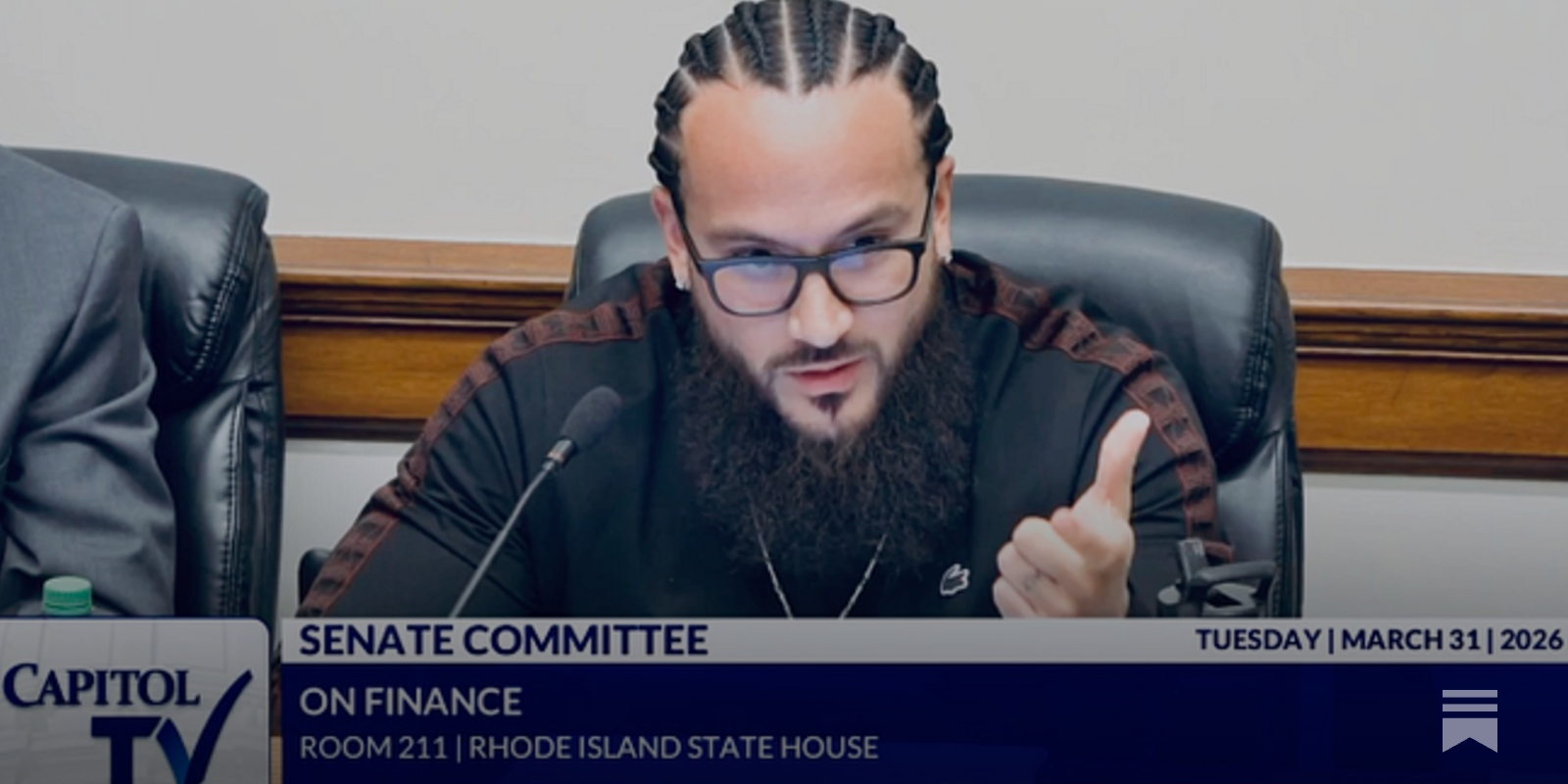
“If you went and looked at the Governor’s Campaign Account, he receives very large contributions from what some might call the ‘Marijuana Mafia,’ so there are a very limited number of active licenses,” said State Senator Jonathan Acosta at a March 31 Senate Finance Committee meeting. “They are making a lot of sales, as we can see. And we have been very slow to process applications for new licenses… So that these 8 to 9 active licensees can continue to corner the market and suck as much profit as possible, while we wait for some social equity applicant licenses to come online… Every day that we don’t online someone else, is another day that they can continue to corner the market. And that’s just fundamentally unfair.”
Unfair, maybe, but the CCC, under Commissioner Reddish, is doubling down on the delays begun by Commissioner Ahern. At the same Senate Finance Committee meeting, Reddish said, “Currently the Commission is considering what it would look like to potentially have a staggered implementation of the licenses, because there is a concern that if we introduce too many licenses at one time, we could see price compression and we could see the market that looks similar to other states where, ultimately, yes, we have more licenses, but now we have the price so low that potentially folks won’t be able to make the money or be able to benefit from the industry in the same manner.”
Reddish’s talk of “staggered implementation of licenses” is almost funny, given that there has been no implementation of licenses at all.
This fits with the desires of Mother Earth’s Joe Pakuris, who told the Boston Globe in March that _“_They should not allow dispensaries on top of dispensaries on top of dispensaries.” After all, his market share and the record profits it brings him are on the line.
I’ll end on this note:
James Calderon’s use of the word “corruption” is worrying because if there is corruption taking place, the task of investigating and prosecuting that will most likely fall to the next Attorney General, and right now, that seat is up for grabs. It may well go to Kimberly Ahern, for whom Gerald Herrington, a lobbyist for Rhode Island cannabis retailer RISE Warwick, co-hosted a Washington, D.C. fundraiser on December 4, 2025, to fill her Attorney General campaign accounts. Herrington’s two brothers are both affiliated with RISE Warwick: James Herrington as a director, and Stephen Herrington as an affiliate of Canwell LLC, the parent company to RISE.
Kimberly Ahern is taking money from the incumbent cannabis retailers she enriched as chair of the Cannabis Control Commission, to run for Attorney General.
To be continued…
Governor Saniel McKee and Kimberly Ahern did not reply to a request for comment.
Share
SteveAhlquist.news is a reader-supported publication. To receive new posts and support my work, consider becoming a free or paid subscriber.
Subscribe
1
Here’s the full text of James Calderone’s statement. The comments were precipitated by an expected lawsuit that further delayed the issuance of social equity and co-op licenses. {See: The cannabis oligopoly flourishes while potential social equity licensees hemorrhage money]
“When we finally established the CCC, and we had a three-panel board, I was optimistic because … things were moving forward,” said Jason Calderon, owner of the cultivator Bonsai Bud and a licensed applicant. “Positive things were happening. As many of you are aware, the head of the CCC stepped down in the middle of this process and, in my opinion, set the process back significantly… We were told that everything would move forward under the status quo and that we would reach a resolution. Up until April 8, I truly believed that.
“Then the eighth happened… It punched me in the gut and made me feel like everything we were pushing towards was two steps forward, 10 steps back. That’s where we are right now. We had addressed this situation well over a year ago. We brought this to CCC’s attention. This lawsuit has been going on since 2024. Everybody was aware of it. For a department made up entirely of attorneys, we thought we were being fed the correct information and that we truly had a path forward. Speaking for myself, that made me comfortable spending the money to apply to one of these stores.
“I’m over $60,000 into this project to date, with no end in sight… I don’t believe I can sustain six months, let alone a year plus, of paying rent on a building where I’m not recouping any expenses… All of us here have done the work in establishing our locations. [Finding locations] had to be a strategic thing: you had to be well placed, and you had to be in an area that would see foot traffic because competition was going to grow.
“The people here who have done their due diligence in securing these locations may lose them, and therefore identified properties for future applicants who got to sit on the sidelines, wait this process out, and spend no money. Now they’re going to have their pick of the litter.
“It makes you ask, ‘Was this a deliberate thing? With an office full of attorneys, how was this not foreseen? How was this not jumped ahead of? Why are we here in this position today?’
“This is boggling to me. As somebody who has attended almost every CCC meeting, who has spoken at the State House countless times, and who has given more news interviews than most, to be caught off guard like this … I feel naive. I feel slightly stupid for having trusted and believed that everything was happening in good faith.
“I no longer believe that. I can’t stand here today and say that this process has been done in good faith. Had this been addressed a year ago, we wouldn’t be in this position today. We sure as hell wouldn’t be sitting here, on the verge of bankruptcy, had this been addressed when we brought it up. We have CCC meetings once a month. We’ve addressed this issue countless times. The same people that you’re going to hear from today have spoken about this countless times. Yet we’re still here today.
“I don’t know if there’s a path forward without pressure, true community engagement, and holding people accountable. We have elections coming up, and we’ve always been told that that’s our voice. That’s where we can make a change. Now, more than ever, we need to exercise that. We need to come together. We need to get this out in front of everybody. The more people who are on board for this, the stronger our voices will be, and the better shot we have of getting a resolution. At the end of the day, that’s what everybody wants: a resolution, a timeframe for that resolution, and not to be kept in the dark as we have been for years.
“This is my ninth year in the cannabis industry, and in nine years, I can’t tell you how many times I’ve seen the goalposts moved for certain individuals and companies. When is enough, enough? How many times can we make the same argument before something is done and people are held accountable? I hope we can bring attention to this, hold people accountable, and start putting some butts to the fire.
“Through this process, I’ve been vocal, and I’ve lost my ability to sell at one dispensary for being vocal, and I can only imagine that’s not going to get better the more vocal I am. But I’m at a point now where it’s like, if you don’t speak, you’re going to lose your business. If you do speak, you may lose your business. It’s the doo-in-the-corner scenario. You can only back somebody in a corner for so long before they’re going to come out clawing. That’s where I’m at now. I’ve succumbed to the pressure of the monopolies and the gatekeeping that’s been going on, and I’ve had enough. Now I’m going to talk, and I’m going to ask, “What’s going on?” and I’m not going to stop. Even if I lose my license, I’m not going to stop. The state’s going to hear about me for as long as the program’s going on here. There is coming a time when federally, cannabis is going to be regulated and controlled. There is no statute of limitations on corruption, and if we find it, we’re coming.”
2
For instance:
[See also: Kim Ahern, candidate for Attorney General, responds to accusation that she violated the state’s lead mitigation law]”}]] 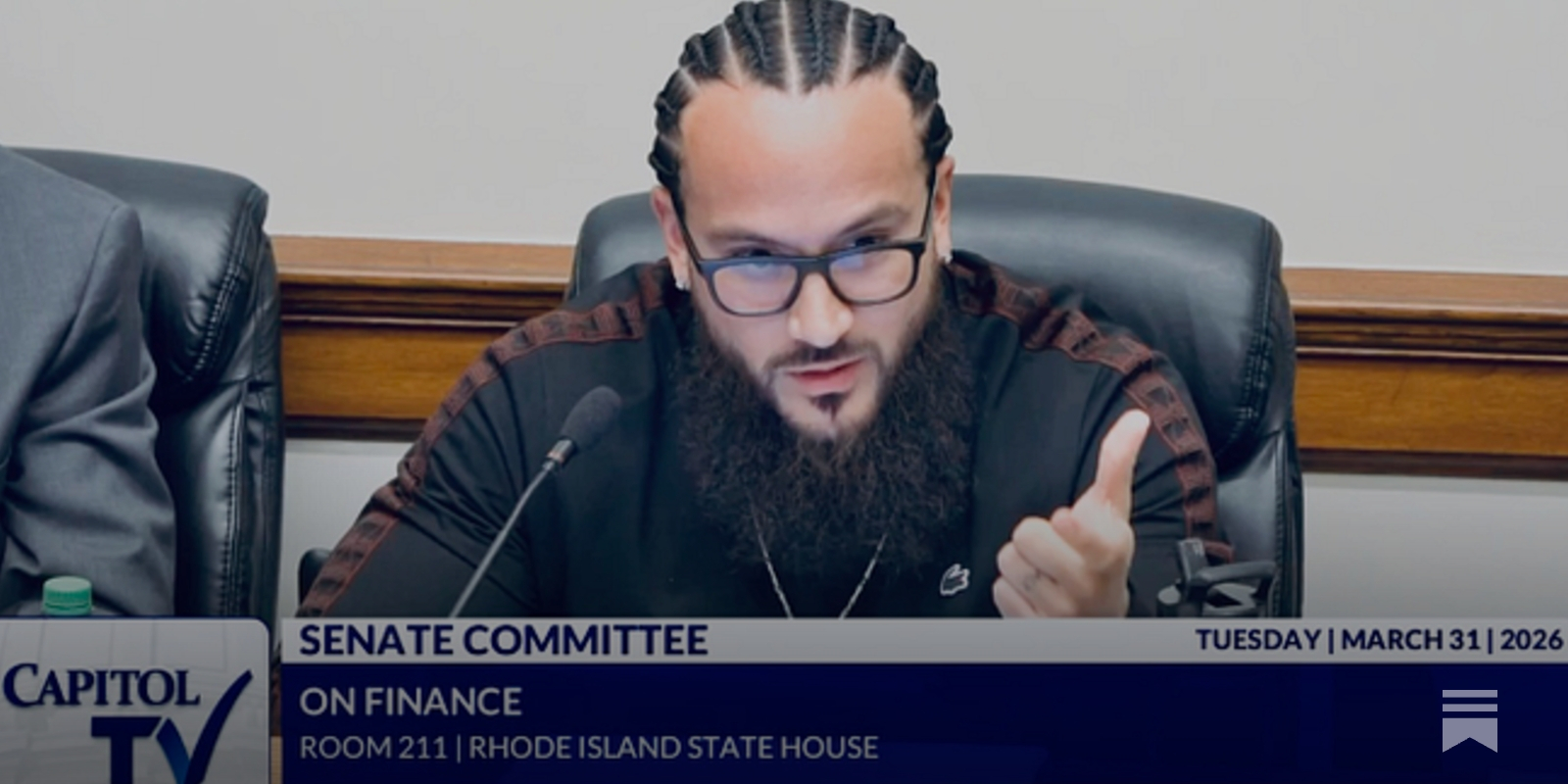 Read More